Getting Your UV Wavelength Exactly Right
Here’s the thing about UV curing: you can’t just grab any lamp off the shelf and hope for the best. It doesn’t work like that. Different photoinitiators are picky—they only react to very specific nanometer ranges. If your wavelength is off by even 10nm, you’re in trouble. You’ll end up with a surface that feels tacky to the touch, or worse, a substrate that isn’t cured at all. That’s why we build these lamps to order.
The Trick to Spectral Output
We spend a lot of time obsessing over the emission peak. Depending on what you’re doing—maybe you’re sterilizing a surface with UVC or pushing resin deep into a layer with UVA—we tweak the gas mixture and the electrode geometry. We aren’t just aiming for a “general range.” We tune the lamp to match the exact absorption spectrum of your specific ink or adhesive. It’s a balancing act. You want the bottom layer fully cross-linked, but you don’t want to “over-bake” the surface.
Quartz and the Heat Struggle
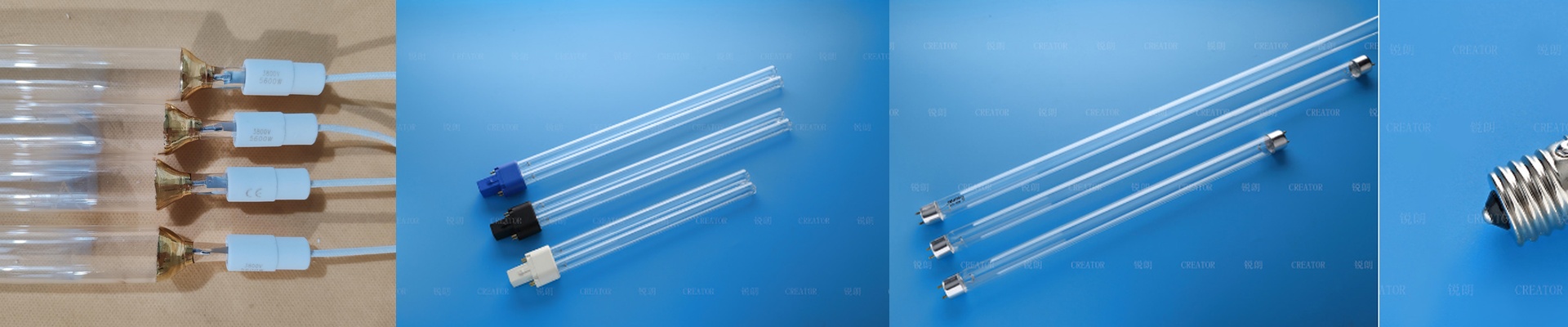
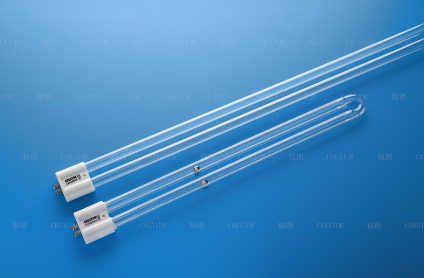
Standard glass is useless here because it just blocks the UV. To get that light through, we use high-purity synthetic quartz. But there’s a catch with the walls. A thinner wall lets more UV light out, which is great for performance. But it also makes the tube fragile. One wrong move during installation and snap. We work with you to find that sweet spot between maximum light and a tube that won’t break the moment you touch it.
Real-World Headaches
Custom lamps pack a massive amount of energy into a tiny space. When we bump up the wattage to speed up your production line, the heat spikes. You can’t just plug these in and walk away. If your cooling system—whether it’s forced air or water jackets—isn’t up to the task, things go south quickly. You’ll see the quartz warp or the electrodes burn out way too soon. We give you the exact spectral data you need. That way, you can wire everything up and dial in your conveyor speed so every single piece comes off the line cured perfectly.